
Red vs. Green Laser Levels: What Are the Differences?
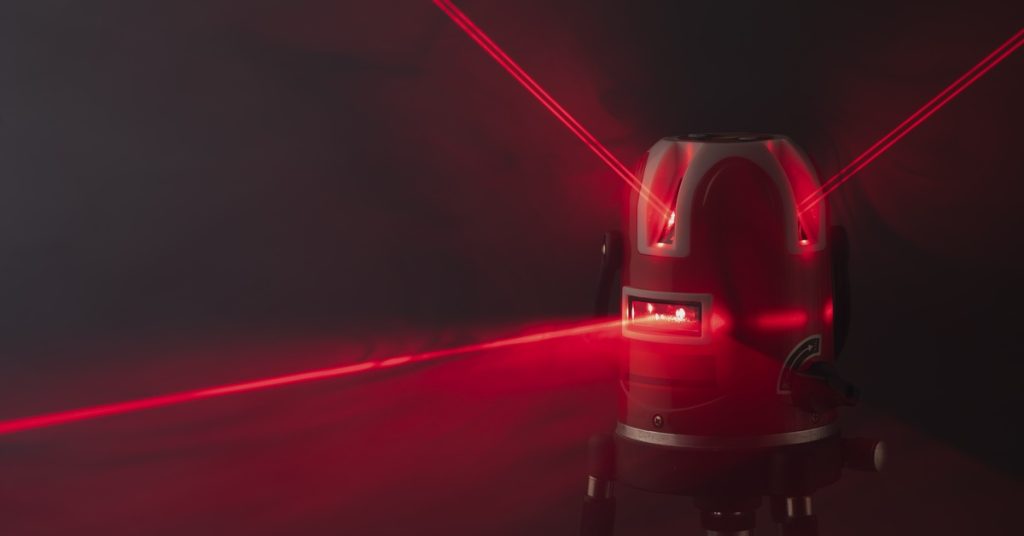
Every successful job site layout depends on using the right equipment. Differentiating between red and green laser levels is something that contractors and tradespeople must do whenever a project demands accurate, reliable layout work.
Both laser types produce professional results, but they behave differently depending on your environment and sight lines. Understanding those differences up front helps you avoid layout errors that cost time and money to fix.
How Each Laser Type Generates Its Beam
Laser levels do not all use the same technology to produce their beams. The light source and the underlying optics separate red and green models in ways that affect everything from battery draw to outdoor performance. Knowing what happens inside the tool gives you a clearer picture of why each one excels in certain conditions.
Red Laser Technology
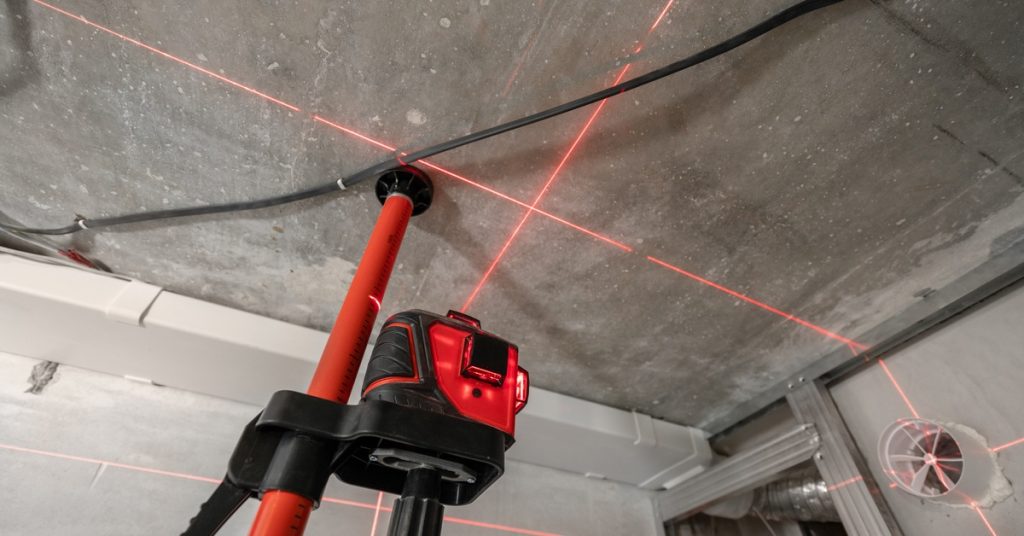
Red laser levels use laser diodes that have been in commercial production for decades. The technology is mature, the components are widely available, and the manufacturing costs reflect that history. Red diodes typically operate at wavelengths between 630 and 680 nanometers. That wavelength falls within the visible spectrum, but it lies at the far end, where the human eye is less sensitive.
In bright ambient light, red beams can wash out quickly, which is why red laser levels tend to perform best in controlled indoor settings. For trades professionals who work primarily inside, this limitation rarely creates a problem in day-to-day use.
Green Laser Technology
Green laser levels produce their beam using diode-pumped solid-state technology, which converts an infrared source into visible green light at around 520 to 532 nanometers. That wavelength lands near the center of the human eye’s peak sensitivity range. The result is a beam that appears significantly brighter, even when the power output matches that of a comparable red model.
Green lasers demand more from their power source, leading to higher battery consumption, but the visibility advantage in challenging conditions often justifies the trade-off. Manufacturers have worked to close the efficiency gap in recent years, and many current green models offer improved runtime compared to earlier generations.
Visibility and Range on the Job
Beam visibility is the practical centerpiece of any comparison between red and green laser levels. A line you cannot see clearly is a line you cannot use accurately. In fast-paced work environments, squinting at a faint beam costs time and increases the likelihood of mistakes.
Indoor Performance
In dimly lit or moderately lit interiors, red laser levels provide reliable visibility at ranges suitable for most standard installation tasks. Standard work, like interior wall alignment or cabinet installation, falls well within their capabilities. The human eye perceives green beams up to four times brighter than red at equal power, so green models give you a wider margin in spaces with overhead fluorescent lighting or near windows.
If your work takes place in commercial interiors or any environment where you cannot fully control the light, a green beam holds its definition much longer across the floor or ceiling. That extra clarity reduces the chance of a misread that throws off an entire layout.
Outdoor and Bright-Light Use
Direct sunlight is the most demanding test for any visible laser. Because ambient light can easily wash out the beam, red lasers usually require a detector to operate at outdoor distances. Green lasers make it easier to see the beam in bright conditions, though most green models still benefit from a receiver when working at longer distances or under the full sun.
Pairing any laser level with a quality detector expands your effective range, regardless of beam color, and provides a more reliable reference point for large-scale exterior projects. For site work involving grading or exterior framing, this pairing becomes a standard part of the setup rather than an optional add-on.
Choosing the Right Option for Your Work
The choice between red and green lasers comes down to the following factors. Consider each carefully before investing in a laser level kit:
- Budget: Red laser levels cost less up front, making them the more economical choice for light-duty or occasional jobs.
- Environment: Green is the stronger performer in bright, high-ambient-light settings; red works well in spaces where you control the lighting.
- Battery life: Red diodes draw less power, extending runtime between charges or battery swaps, which matters on long days of continuous use.
- Accuracy requirements: Both types deliver professional-grade accuracy within their rated range. However, green models often provide a crisper, easier-to-read line that reduces the risk of interpretation errors.
No single answer fits every trade or every project. A residential electrician working in unfinished interiors has different priorities than a commercial flooring contractor working under bright on-site lighting. Matching the tool to your working conditions is what separates a solid investment from a piece of equipment you no longer trust.
Getting the Most from Your Laser Level
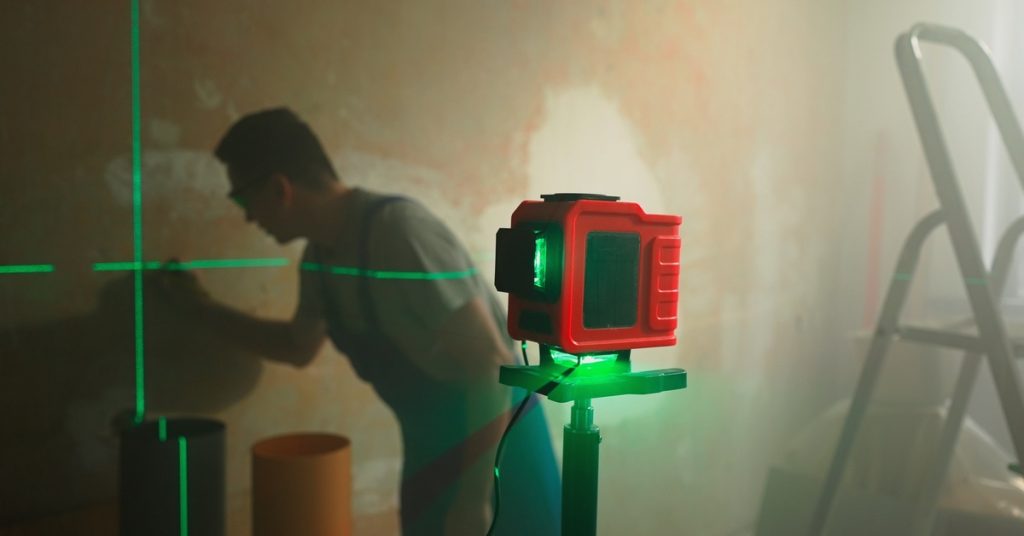
No matter which beam color you pick, how you use and set up your laser level matters. Start by mounting your unit on a stable tripod or bracket that’s rated for your type of work. Keep the lens clean, since dust or moisture can scatter the beam and hurt your accuracy. Always check calibration before a big layout, and store your laser level in its case to protect the pendulum or self-leveling mechanism.
A little maintenance keeps your laser level working like new. Try not to drop or bump it; small impacts can throw off the self-leveling mechanism. If you work on multiple job sites, get in the habit of checking the level each morning. It only takes a moment and helps make sure your measurements stay accurate all day long.
If you often work in harsh lighting or outdoor conditions, a green laser level makes your job easier. If most of your work is indoors and you need a dependable, budget-friendly tool, red laser levels are a great pick. No matter which you choose, investing in a quality model from a trusted brand will pay off in the long run and give you more reliable results than a bargain tool with weak optics or a flimsy case.
Red or Green: Make the Call Before the Job Starts
What are the differences between red and green laser levels? There’s no one-size-fits-all answer to this question. The right choice depends on your unique needs and job conditions.
Think about the types of jobs you do, how far you need the laser to reach, and what you want to spend. Then pick the tool that best fits those needs. H To O Supply carries professional-grade options across both categories so you can find the fit that keeps your work on the mark.

Recent Comments