
Bluetooth vs. Traditional Access Control Systems
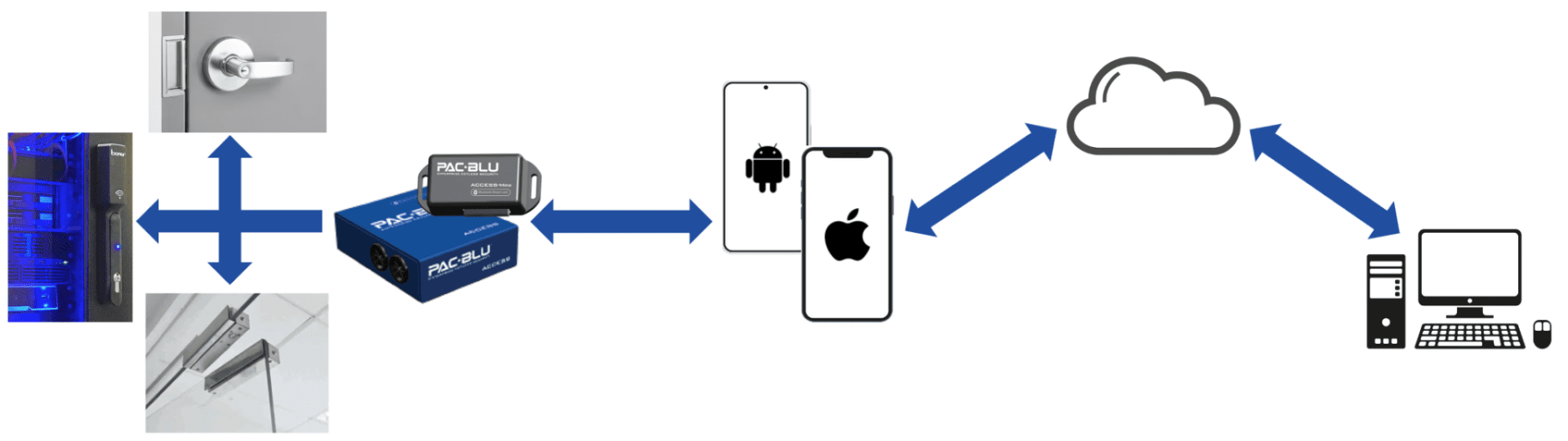
Access control plays an important role in protecting industrial facilities, commercial buildings, utility sites, warehouses, and other restricted areas. However, organizations now have more ways to control entry than ever before. Traditional systems rely on physical keys, cards, keypads, or centrally wired equipment, while Bluetooth systems use smartphones and other compatible devices to manage access digitally.
Both approaches can provide dependable security when organizations choose appropriate hardware and manage it correctly. Understanding their differences can help facility managers, contractors, and procurement teams select a system that balances security, convenience, cost, and long-term maintenance.
What Is a Traditional Access Control System?
Traditional access control covers several established methods for restricting entry. A basic mechanical system uses a physical key and lock cylinder. More advanced electronic installations may use keypads, proximity cards, fobs, or wired readers connected to a central controller.
These systems remain common because organizations understand how they work and can choose from many proven hardware configurations. Mechanical locks also require no electrical power or wireless connection, which makes them practical for remote locations, equipment enclosures, gates, storage areas, and other applications where electronic infrastructure may not make sense.
Electronic card and keypad systems add greater control. Administrators can assign credentials to individual users, restrict access to specific areas, and maintain records depending on the system’s capabilities.
How Does Bluetooth Access Control Work?
Bluetooth access control allows a compatible mobile device to communicate with a lock or reader over a short-range wireless connection. Instead of inserting a key or presenting a conventional access card, an authorized user can use a smartphone as a credential.
The exact process depends on the hardware and software. Some systems require users to open an application and initiate an unlock command. Others can recognize authorized devices when they enter a defined range.
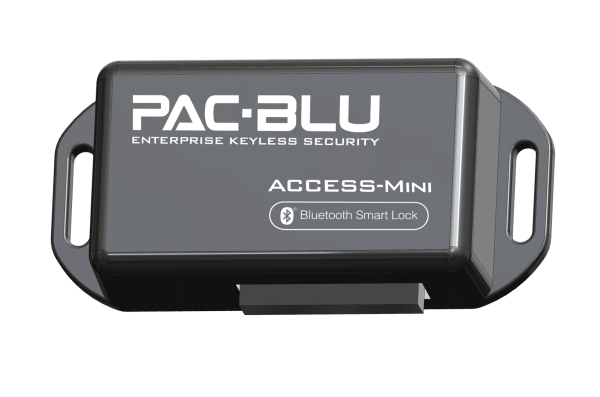
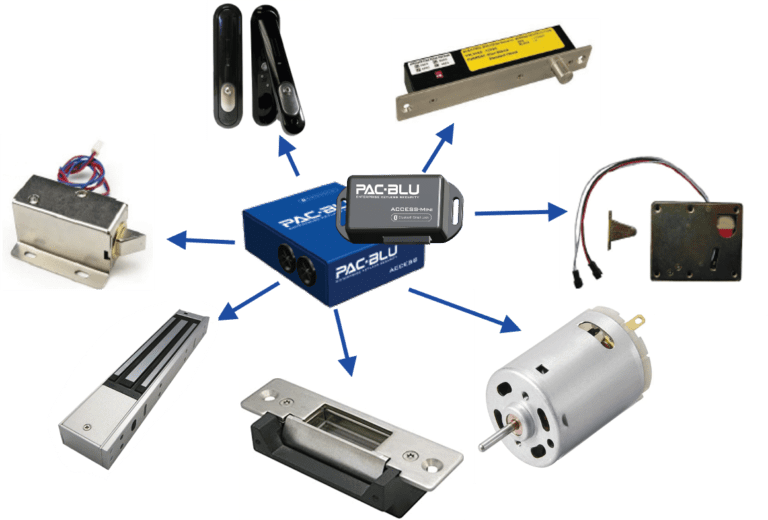
A Bluetooth-enabled keyless access control unit can provide organizations with a convenient way to manage doors, gates, cabinets, or other controlled access points without distributing large numbers of physical keys.
How Do the Credentials Differ?
Credential management creates one of the biggest differences between Bluetooth and traditional systems.
A mechanical lock requires organizations to distribute physical keys. Card-based systems replace those keys with cards or fobs, but administrators still need to issue physical credentials. Bluetooth systems can turn compatible smartphones into digital credentials.
Digital credentials can simplify access for organizations with changing personnel. Administrators may issue credentials remotely, set expiration periods, or revoke permissions when workers no longer require access.
Physical keys offer simplicity, though. They do not depend on a smartphone battery, application, wireless communication, or compatible operating system. That straightforward design still carries significant value in many industrial applications.
Which System Makes Access Easier To Manage?
Bluetooth systems can make credential administration more efficient, particularly for facilities with many users or frequently changing access requirements.
Consider a facility that regularly works with employees, contractors, vendors, and temporary personnel. Managing physical keys for every person can create logistical challenges. Someone must distribute the keys, keep records, collect them later, and address any missing credentials.
Digital access can streamline that process. Depending on the platform, administrators can grant temporary permissions and remove them without physically exchanging hardware.
Traditional electronic systems can offer similar centralized management when they use programmable cards or fobs. As a result, organizations should compare the management capabilities of specific systems instead of assuming that Bluetooth automatically provides greater control.
What Happens When Someone Loses a Credential?
Lost credentials create security concerns with any access system, but each technology handles the problem differently.
If someone loses a traditional mechanical key, the organization may need to recover the key, rekey the lock, or replace the cylinder if security personnel cannot account for the credential. Keyed-alike systems require even greater attention because one missing key may provide access to several locks.
Administrators can usually deactivate lost cards and fobs without changing the physical lock. Bluetooth systems can offer a similar advantage by allowing authorized personnel to revoke a digital credential.
However, organizations still need clear procedures for lost or stolen smartphones. Fast credential revocation matters just as much as the technology itself.
How Do Bluetooth and Traditional Systems Compare for Security?
No access control technology provides strong security simply because it uses newer technology. Hardware quality, credential policies, installation practices, software management, and user behavior all influence system security.
Traditional mechanical locks depend heavily on cylinder design, key control, construction materials, and resistance to physical attack. High-quality lock bodies may use hardened steel components, corrosion-resistant materials, protected shackles, and other features that improve durability.
Electronic and Bluetooth systems introduce different considerations. Organizations must evaluate credential protection, administrative controls, software updates, encryption, and procedures for compromised devices.
Security teams should examine the complete system rather than focusing only on the method that unlocks the door.
Does Bluetooth Access Control Require More Infrastructure?
Bluetooth can reduce certain infrastructure requirements because smartphones communicate wirelessly with compatible hardware. However, “wireless” does not necessarily mean infrastructure-free.
Depending on the product, Bluetooth locks and readers may need batteries, wired power, gateways, network connectivity, management software, or cloud services. Organizations should determine exactly what a system requires before purchasing hardware.
Traditional mechanical locks require very little supporting infrastructure. That simplicity can make them particularly useful for remote gates, utility equipment, storage containers, jobsite boxes, and other locations without convenient electrical service.
Traditional electronic access systems may require substantially more wiring because readers, controllers, power supplies, and network equipment need reliable connections.
Which Option Performs Better in Industrial Environments?
Industrial conditions should influence access control decisions. Dust, moisture, chemicals, vibration, temperature changes, corrosion, and repeated handling can place considerable stress on locking hardware.
Organizations should evaluate several physical characteristics before selecting equipment:
- Lock body and housing materials
- Corrosion resistance and protective coatings
- Weather and environmental ratings
- Expected operating temperatures
- Resistance to impact and physical tampering
- Battery requirements for electronic equipment
- Installation location and frequency of use
A sophisticated access platform provides little value if its physical hardware cannot withstand the environment. Industrial buyers should evaluate construction quality alongside electronic features.
Which Option Costs More Over Time?
Organizations should look beyond the initial hardware price when comparing access control technologies.
Mechanical locks may have a lower infrastructure cost because they do not require software platforms, batteries, electrical connections, or networking equipment. However, lost keys and frequent personnel changes can create rekeying and administrative expenses.
Electronic systems may require a larger initial investment, along with ongoing expenses for software, batteries, network infrastructure, maintenance, or credential management. Bluetooth can reduce costs associated with issuing physical cards or keys, but software and hardware requirements vary significantly between products.
A useful cost comparison should account for the entire expected service life rather than the purchase price alone.
When Does Bluetooth Access Control Make More Sense?
Bluetooth access control often suits organizations that want flexible credential management and already rely heavily on mobile devices.
Facilities with frequent employee turnover, temporary contractors, multiple access levels, or changing schedules may benefit from digital credential administration. Bluetooth can also reduce the need for workers to carry separate cards, fobs, and keys.
However, convenience should never replace a complete security evaluation. Buyers should examine physical construction, software support, credential security, environmental suitability, emergency access procedures, and long-term maintenance requirements.
How Should You Choose Between Bluetooth and Traditional Access Control?
The right choice depends on what an organization needs to protect and how people interact with the secured area.
Traditional mechanical locks offer straightforward operation, minimal infrastructure requirements, and dependable performance when buyers choose quality materials and appropriate designs. Traditional electronic systems add centralized credential management and access records. Bluetooth systems can further simplify credential distribution by integrating mobile devices into the access process.
For many facilities, the strongest approach may involve more than one technology. A building could use electronic or Bluetooth access at high-traffic entrances while relying on durable mechanical locks for remote gates, cabinets, equipment, or secondary access points.
Ultimately, buyers should evaluate security requirements, environmental conditions, credential management, hardware construction, failure scenarios, maintenance demands, and total cost. Choosing access control according to the application helps organizations achieve dependable security without paying for unnecessary complexity.

Recent Comments